

For a cross-border private car journey, the shortest route isn’t always the simplest plan. A private car transfer can reduce connections and luggage handling, while a train or bus may suit travelers with more time and a different budget.
Weigh convenience against cost by considering your itinerary, passenger count, luggage, and how much value you place on travelling directly. Journey times, connections, and pickup arrangements all affect what works best for your trip.
This guide compares private car travel with public transport, explains what to consider when assessing journey time and comfort, and outlines the details to prepare before booking. You’ll also see how a door-to-door transfer with a professional driver from Prague Airport Chauffeur can simplify cross-border travel for individual, business, and group itineraries. Settle the key logistics in advance so you can choose the option that fits your plans and travel with greater confidence.
Key Takeaways
- Compare a direct private transfer with public transport by considering connections, privacy, luggage, and how flexible your itinerary is.
- For a cross-border private car journey, prepare your pickup and drop-off details, passenger count, luggage needs, and preferred timing.
- Clear trip information helps coordinate the journey and makes it easier to review the arrangements before travel.
- Use the booking checklist to bring key details together and reduce last-minute uncertainty.
- Professional intercity transfers provide a direct option for individual, corporate, and group travel.
When Does a Private Car Transfer Make Sense for Cross-Border Travel?
Choosing between a direct private journey and public transport with connections comes down to more than travel time. Consider how you’ll manage luggage, how fixed your schedule is, and whether you prefer to travel privately or are comfortable changing services along the way. A private car transfer can simplify the trip, but it isn’t the right fit for every traveler.
Road journey times vary with the route and conditions on the day, including traffic and roadworks. Within the Schengen Area, routine internal border checks are generally absent, although temporary checks may occur. Keep valid identification accessible and allow flexibility in your schedule.
Which travelers benefit most from a direct transfer?
A direct transfer can suit passengers carrying several bags, traveling with children, or coordinating a group that would otherwise need to stay together through multiple connections. Pickup and drop-off at agreed locations remove the need to plan changes between transport services. Business travelers may value a more controlled schedule, while leisure travelers may prefer a calmer start or finish to a busy itinerary. If you’re traveling light and have time to spare, public transport may be a better match.
What a private intercity transfer typically means
A private intercity transfer is a pre-arranged journey reserved for the booked passenger or group, traveling directly between agreed pickup and drop-off locations. Unlike a shared shuttle, it isn’t planned around combining unrelated passengers. Unlike self-driving, it places the driving with a professional driver, so passengers can focus on their journey rather than route planning and the road.
Consider the whole travel day, not just the time spent moving between destinations. A connection-based option may involve reaching a station or stop, handling bags during a transfer, and allowing time between services. A private car brings these separate steps together in one coordinated journey. That convenience can be especially useful when the pickup point is not close to a transport hub or when passengers have different needs.
Private transport is worth considering when a direct journey, privacy, or simpler coordination matters more than choosing the lowest-cost option. It can help keep a group on one schedule instead of coordinating individual connections. Travelers with a flexible timetable, light luggage, and a preference for public transport may find connections manageable. Compare the full itinerary and the effort involved at each stage. The best choice is the one that fits your priorities, not simply the one with the fewest minutes on paper.
How to Plan a Private Car Journey from Pickup to Drop-Off
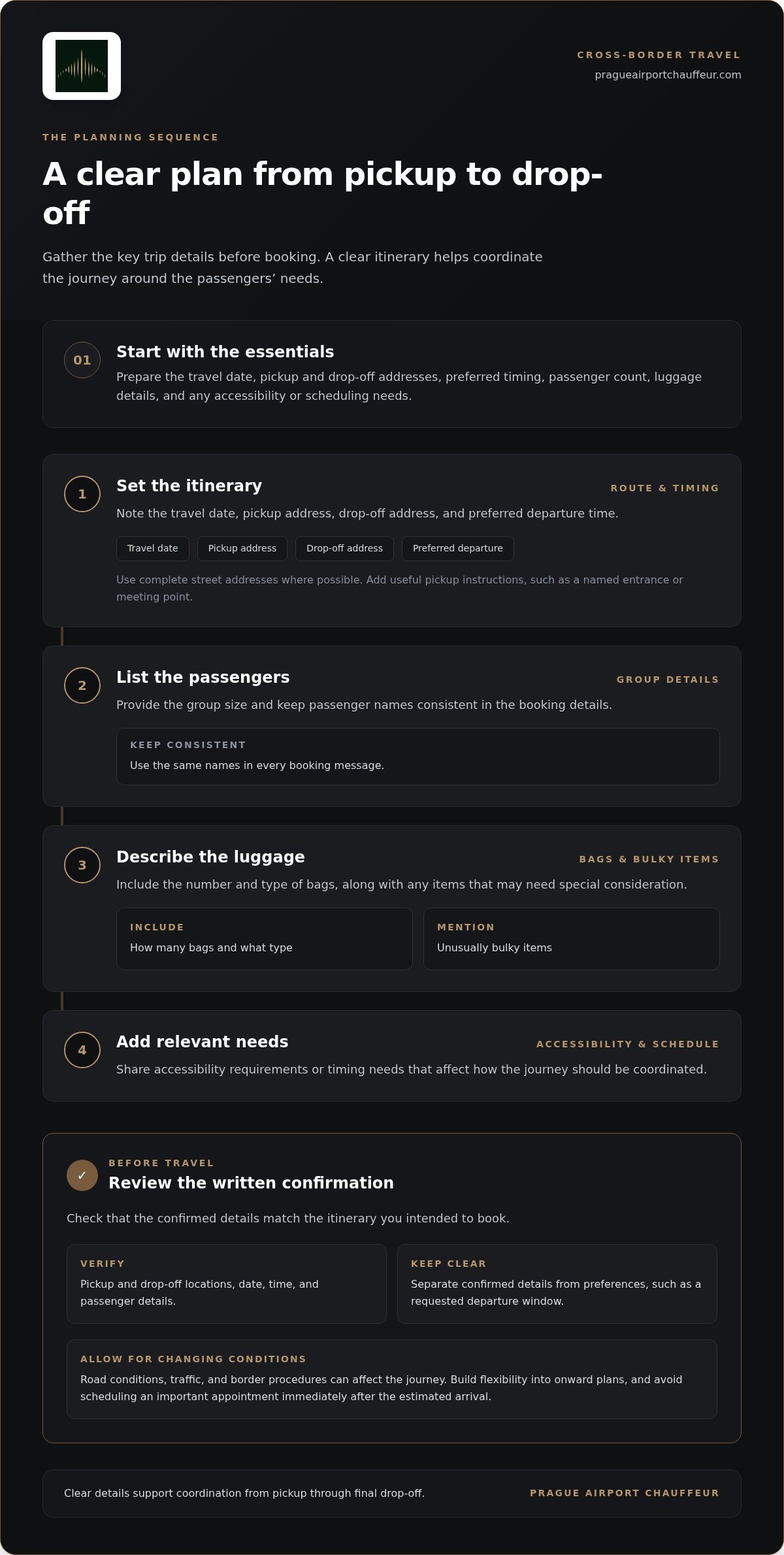
A well-planned transfer starts with a clear itinerary. Before arranging travel, establish where the journey begins and ends, who is travelling, how much luggage the group has, and when you prefer to be picked up. Sharing these details together gives the journey a practical foundation and helps coordinate pickup and drop-off around the passengers’ needs.
To plan a private transfer, provide the travel date, pickup and drop-off addresses, preferred timing, passenger count, luggage details, and any specific accessibility or scheduling needs.
What details should travelers prepare before booking?
Gather the essential information before starting the booking process. Use complete street addresses where possible, and include useful pickup instructions, such as a named entrance or meeting point. Give an accurate passenger count and describe luggage clearly, including unusually bulky items. If someone in the group has an accessibility requirement or particular scheduling need, include it at this stage so it can inform the arrangements.
Work through this sequence:
- Set the itinerary. Note the travel date, pickup address, drop-off address, and preferred departure time.
- List the passengers. Provide the group size and keep passenger names consistent in booking details.
- Describe the luggage. Include the number and type of bags, along with any items that may need special consideration.
- Add relevant needs. Share accessibility or timing requirements that affect how the journey should be coordinated.
How to keep the journey plan clear
Use the same names, addresses, and timing in every booking message. Separate confirmed details from preferences, such as a requested departure window, to reduce the chance of misunderstanding. If plans change, communicate the update clearly rather than relying on an earlier message to be noticed.
Build flexibility into plans around onward commitments. Road conditions can change, and cross-border travel may be affected by traffic or border procedures. Avoid scheduling an important appointment immediately after the estimated arrival. Allow a sensible buffer that reflects the consequences of being delayed. No estimated journey duration can account for every condition on the day, so keep essential plans realistic.
Before travel, review the written confirmation against your itinerary. Check that the pickup and drop-off locations, date, time, and passenger details match the plan you intended to book. This final review can catch an outdated address or time before it becomes a pickup issue.
For a private intercity transfer, clear information supports coordination from the first pickup detail to the final drop-off. Arrange a private intercity transfer with professional drivers for individual, corporate, or group travel.
Private Car or Public Transport: Which Option Fits Your Journey?
The central choice is between a direct, dedicated transfer and public transport that may involve connections. Neither option is automatically better. Your schedule, luggage, privacy preferences, and willingness to coordinate changes all affect which one fits.
Use this comparison to consider the practical trade-offs, then check your preferred option against the details of your itinerary.
| Consideration | Private car | Public transport |
|---|---|---|
| Directness | Travels between agreed pickup and drop-off points. | May require travel to and from stations or stops. |
| Connections | A single arranged journey reduces the need to coordinate transfers between services. | Connections may be part of the itinerary and require planning. |
| Privacy | Reserved for the booked passenger or group. | Shared with other passengers on scheduled services. |
| Luggage | Travelers can keep their bags with them throughout the journey. | Passengers manage their luggage while moving between services. |
| Group coordination | Passengers travel together on one coordinated itinerary. | Everyone needs to follow the same connections and schedule. |
When public transport may be the better fit
Public transport can suit travelers with flexible plans who are comfortable checking routes, schedules, and connections. It may also appeal if you prefer to plan each leg independently. Review the actual itinerary for your travel date, including connection points and the time needed to change services. This helps you decide whether the schedule aligns with your plans rather than assuming every option follows the same pattern.
When a private car may offer more convenience
A private car may suit passengers who want a dedicated journey between agreed locations, particularly when traveling together with luggage or working to a coordinated schedule. A professional driver handles the driving, while passengers avoid arranging changes between transport services. The benefit is less transfer planning, not a promise that road conditions or arrival times will be predictable.
Public transport offers more independent planning but may require passengers to manage connections, while a private car provides a dedicated, direct journey with coordinated pickup and drop-off. Use that trade-off as your guide: choose public transport if flexibility and managing the itinerary yourself suit you; consider a private transfer if privacy, shared group timing, and fewer handoffs matter more.
Before deciding, look beyond the main journey leg. Include the effort of reaching the departure point, handling bags during any changes, and coordinating everyone’s arrival. A balanced comparison considers the whole door-to-door plan, not just the transport mode itself.
A Booking Checklist for a Smooth Private Intercity Transfer
A clear booking begins with the details that shape the journey. Put your itinerary, passenger count, luggage, preferred timing, and contact information in one place before submitting the request. Complete details help coordinate pickup and drop-off, while a final review of the confirmation can catch errors before travel.
Use this checklist to prepare:
- Itinerary: Add the travel date and complete pickup and drop-off addresses. Include a clear meeting point or entrance where useful.
- Passengers: Provide the correct number of travelers and use consistent names in booking communications.
- Luggage: Describe the number and type of bags accurately, including bulky items that may affect arrangements.
- Timing: State your preferred pickup time and any important arrival commitments. Leave reasonable flexibility for changing road conditions.
- Contact details: Provide a reachable contact for journey coordination and keep it consistent in your booking information.
Passenger, luggage, and itinerary readiness
Before sending the details, compare them with the plans of everyone traveling. Count all passengers, confirm the addresses, and make sure the luggage description reflects what the group expects to bring. Share relevant accessibility requirements or scheduling needs as part of the itinerary, rather than leaving them until the day of travel. These details help make the arrangements clear.
Questions to resolve in the booking details
Review the applicable booking terms before travel, particularly any instructions for changes. Make sure you understand how a requested update is handled, and keep the latest itinerary details together so everyone in the group is working from the same plan. If a pickup time or location changes, keep the communicated information clear and consistent.
Once the journey is arranged, compare the confirmation with your original request. Check the date, pickup address, drop-off address, preferred time, passenger count, luggage notes, and contact information. Correct any mismatch through the booking communication channel before setting out. Don’t rely on memory when a written confirmation is available.
Allow room in your wider schedule for traffic or other changing road conditions, especially if you have a time-sensitive commitment after arrival. A sensible margin can make the day feel less pressured, though no fixed allowance can account for every journey. Keep essential plans realistic and avoid placing an important appointment immediately after the expected arrival.
When the key details are accurate and the terms are clear, you can approach the transfer with greater confidence. Explore the intercity private transfer guide to consider the service in relation to your travel plans.
Arrange a Private Car Transfer with Professional Drivers
Once you’ve weighed direct travel against public transport and clarified your itinerary, choose a service that fits the passengers and purpose of the journey. A private intercity transfer provides dedicated passenger transportation between agreed pickup and drop-off points, with a professional driver responsible for the journey. It’s a practical arrangement for travelers who value a coordinated trip and less transfer planning.
What to expect from a dedicated intercity service
A defined itinerary gives the transfer a clear structure: where passengers will be collected, where they’re going, and who is traveling. Professional drivers operate the transportation service, while passengers can focus on their own plans rather than driving. This approach works for an individual traveler, a corporate itinerary, or a group traveling together. The journey is arranged around the booked passengers, not shared with unrelated travelers.
Different trips call for different arrangements. A business traveler may need a straightforward connection between scheduled commitments. A leisure traveler may prefer a direct journey with personal belongings kept close. For larger groups, large coach services provide another transport option without requiring every passenger to arrange a separate journey. Choose according to the itinerary, passenger count, and group’s needs.
Consider the entire travel plan when deciding whether a dedicated transfer fits. Direct pickup and drop-off can simplify the journey when reaching public transport stops or coordinating connections would add extra steps. If your schedule is flexible and you’re comfortable managing public transport, another option may suit you better. Match the service to the way you need to travel.
Take the next step with a clear itinerary
Prepare the essentials before arranging your transfer: complete pickup and drop-off details, travel date and preferred timing, passenger count, and an accurate description of luggage. Include any relevant accessibility or scheduling needs. Clear information helps shape the arrangements around the people traveling, whether the plan is for one passenger, a corporate group, or a larger party.
Keep the itinerary straightforward. Identify which details are fixed and which are preferences, then review the journey confirmation so the agreed locations and timing are clear. If plans change, communicate updated information consistently. These steps help everyone work from the same plan and reduce avoidable uncertainty before departure.
A private intercity transfer with professional drivers offers a direct, coordinated option for individual, corporate, and group travel. For larger parties, large coach services can also support group transportation. Share your journey details to plan an arrangement suited to your passengers and itinerary. Plan your private intercity transfer with the key details ready.
Set Your Journey in Motion
The best travel plan supports what you want from the day, whether that means arriving ready for a meeting, keeping a group together, or making the journey feel less demanding. For a Karlovy Vary to Munich private car transfer, begin with the details that matter most to you, then choose an arrangement that lets you travel with greater focus and ease.
A thoughtful itinerary can turn the journey into useful personal time instead of a series of travel tasks. Consider what would make the day feel well paced, and share those priorities when planning your transfer. With professional drivers and intercity transport for individual, business, and group travel, the journey can be arranged around your passengers’ needs.
When you’re ready to take the next step, plan your private intercity transfer. Start with a clear itinerary and arrange your journey with professional drivers.
Frequently Asked Questions
What happens if my travel schedule changes after booking?
If your schedule changes, share the updated details promptly using the contact information in your booking and review the terms that apply to your reservation. Updated timing or itinerary information helps keep coordination clear, especially if the pickup time or destination details are affected. Keep a copy of the latest communication with your booking documents so you and the other passengers can refer to the same plan.
Can I use a private car transfer for a business journey?
Yes. Private transportation can suit a business itinerary if you value a dedicated journey and fewer connection-related distractions. Prague Airport Chauffeur provides business transfers operated by professional drivers. For example, a traveler with several scheduled commitments may prefer one arranged trip rather than coordinating separate transport legs. Share the relevant itinerary details when planning, but leave realistic flexibility for road conditions rather than treating any arrival time as guaranteed.
What should I do if my luggage needs change before departure?
Communicate any change to your luggage as early as possible so the journey can be coordinated with the passenger group’s updated needs. For instance, tell the booking contact if you’ll bring an additional suitcase or a bulky item that wasn’t part of the original plan. Then review your booking information to make sure it reflects the arrangements you’ve made. Don’t assume a particular luggage allowance or vehicle setup.
Should I allow extra time for a cross-border road journey?
Yes. Road conditions, traffic, and border procedures can affect a cross-border itinerary, so avoid relying on an exact journey-time estimate for a time-sensitive commitment. Build flexibility into plans such as onward travel or a scheduled appointment, and check current travel information before setting out. A realistic schedule gives you more room to respond calmly if conditions change, without assuming a particular delay or border wait.
Can a private transfer work for passengers travelling together?
Yes. Private passenger transportation is available for individuals, corporate clients, and larger groups. Large coach services are also available for group travel. When planning, share the full passenger count and describe the group’s luggage needs, including any bulky items. These details help shape the journey around the people traveling together. Avoid assuming a specific seating capacity or luggage limit without reference to your agreed arrangements.
How can I make an intercity pickup easier to coordinate?
Share complete pickup details, a clear travel time, passenger count, luggage needs, and a reachable contact method through the booking process. If the location has several entrances or a large forecourt, describe the intended pickup point precisely in your itinerary. Keep the same information across booking messages and travel notes. Clear, consistent details reduce avoidable confusion, while the confirmed arrangements should remain your reference for the pickup.


